Can a Bunded Oil Tank Explode? Safety, Risks and What Homeowners Need to Know
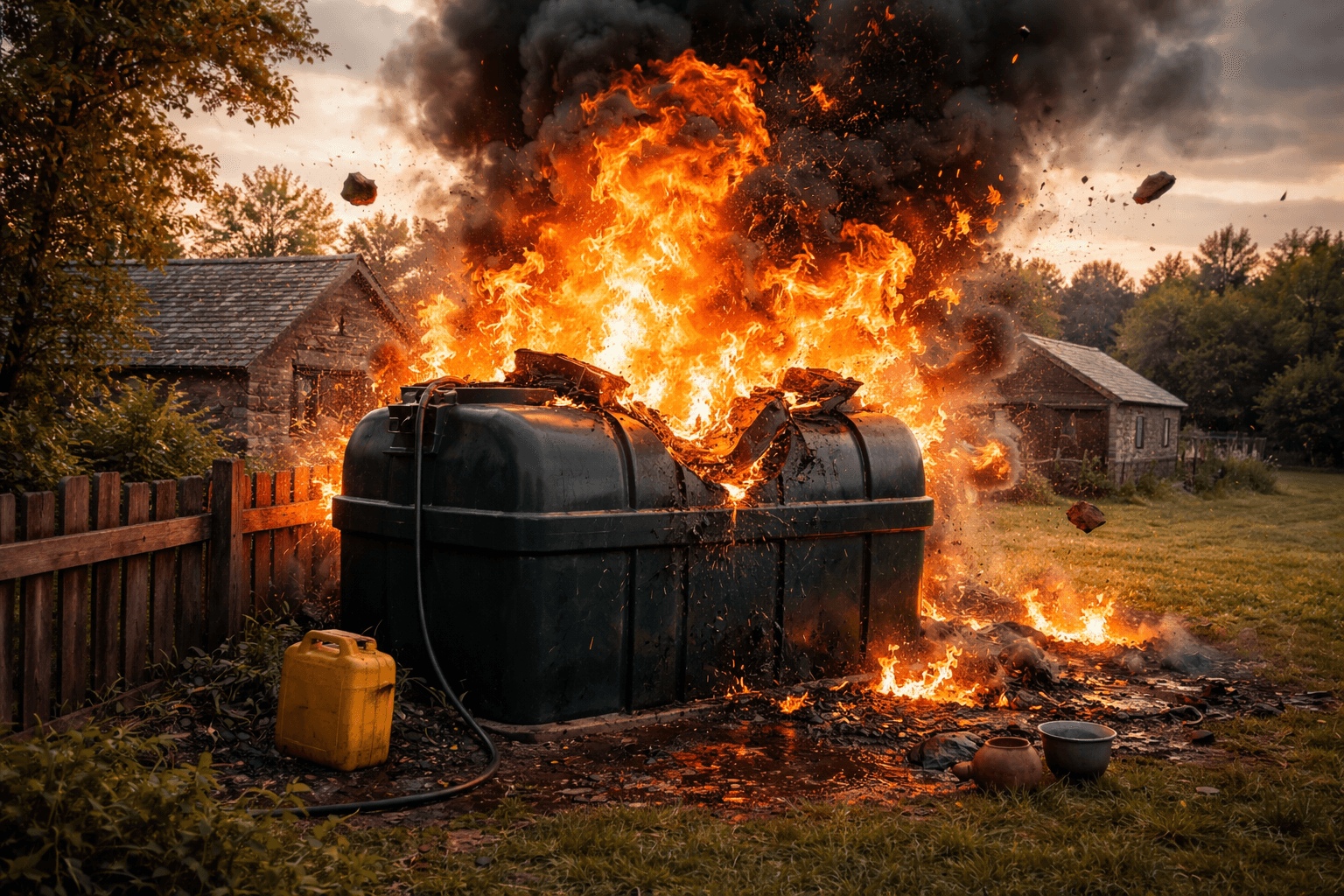
If you rely on heating oil, it is natural to ask serious safety questions about storage. One of the most common is this: can a bunded oil tank explode? The honest answer is that while any fuel storage system carries some level of risk, a properly built, correctly installed, and well-maintained bunded oil tank is designed to make that risk very low. Current industry guidance consistently presents bunded tanks as a safer option because the outer layer provides secondary containment if the inner tank fails.
For homeowners, landlords, and commercial users, what matters most is understanding where the real risks come from. In most cases, problems are not caused by the tank being bunded. They come from poor siting, lack of maintenance, environmental hazards, unsafe surrounding conditions, or ignoring warning signs over time. That is why the conversation around bunded oil tank safety is really about good installation and responsible ownership, not fear-driven myths.
What is a bunded oil tank?
A bunded oil tank is built with two layers. The inner tank stores the oil, while the outer tank forms a protective shell around it. If the inner tank leaks or fails, the outer bund is there to contain the oil and reduce the chance of pollution, property damage, and wider safety issues. Certas Energy describes it as a two-layer design where the space between the tanks contains leaked oil if the inner tank ruptures or fails.
This extra layer of containment is one of the main reasons bunded tanks are widely recommended and, in many situations, required. Tuffa’s guidance explains that bunded tanks reduce the risk of harmful spillages, but also makes clear that risk is not eliminated entirely, which is why proper assessment and ongoing checks still matter.
So, can a bunded oil tank explode?
In practical terms, an explosion is highly unlikely when a bunded oil tank is manufactured properly, installed in the right location, and looked after correctly. That is the consistent message in live industry content currently ranking for this question. The realistic concern is not that a good-quality bunded tank will suddenly explode under normal conditions. The greater concern is what can happen if oil storage is neglected, exposed to unsafe conditions, or poorly managed over time.
Tuffa’s risk assessment guidance lists the key hazards associated with storing large quantities of oil as fire, explosion, leakage, spillage, and flooding. That is important because it puts explosion into context. It is one possible hazard within a wider risk picture, not the expected outcome of owning a bunded tank.
What could increase the risk?
The biggest bunded oil tank risks usually come from avoidable issues. Poor maintenance is one of the most important. Small defects, damage, or wear can become more serious if they are not picked up early. Tuffa states that risk assessments should not be a one-off exercise and should be updated as site conditions change or new risks are identified.
Unsafe siting can also create problems. A tank that is too close to hazards, badly positioned, or installed without considering environmental risks may be more vulnerable than it should be. Government guidance for businesses says fixed tanks must be bunded and places strong emphasis on secondary containment and pollution prevention, while other UK guidance highlights the importance of complying with oil storage regulations where larger quantities of oil are stored.
Another issue is poor-quality installation or unqualified work. Tuffa says oil tank risk assessments should be completed by fully qualified technicians registered with a competent person scheme such as APHC or OFTEC. That matters because safe oil storage depends on more than the tank alone. It depends on the full setup around it.
Why risk assessment matters
A big part of preventing serious oil storage problems is proper risk assessment. Tuffa explains that a bunded oil tank risk assessment should review the site, evaluate the risks posed by the storage system, and advise on ways to reduce the chance of oil spills and other hazards. It also says this process is relevant whenever you want to install a tank on-site, whether at home or on business premises.
The same source says a thorough assessment can include an environmental hazard review, a fire hazard review, details on how the tank will be used, identification of other risks, and specific safety measures to address them. What this really means is that safe oil storage starts before the tank is even filled. It starts with choosing the right tank, the right location, and the right installer.
Are bunded oil tanks safe for homes?
Yes, in the right setup, bunded tanks are widely treated as the safer domestic option. Certas Energy explains that bunded tanks stand out because of their safety features and added protection, and describes the outer layer as an extra barrier if the inner tank fails.
That extra protection is especially relevant where homeowners want to reduce the risk of leaks and limit the impact of failures. It is also why bunded tanks are often discussed not just in terms of compliance, but in terms of peace of mind. A safer tank does not remove the need for maintenance, but it does provide an important additional safeguard.
How to keep a bunded oil tank safe
The most effective way to reduce risk is to focus on a few basics. First, make sure the tank is suitable for the site and installed in line with current guidance. Second, arrange regular inspections and act on issues early. Third, avoid DIY changes or unauthorised tampering. Finally, think beyond the tank itself and consider the surrounding environment, access, fill points, fire exposure, and spill response. These are all themes reflected in current guidance on risk assessment and oil storage regulations.
If you are buying a new tank or replacing an old one, it also helps to work with a supplier that offers a proper range rather than a one-size-fits-all option. Pro Line Direct’s oil tank category includes bunded heating oil tanks, steel bunded oil tanks, waste oil tanks, oil tank accessories, and more, which is useful when matching the tank type to the site and application.
Choosing the right supplier
The quality of the supplier matters because it affects product choice, guidance, and long-term confidence in the installation. Pro Line Direct positions itself as a UK all-in-one supplier and offers a wide range of products across oil tanks and related categories, making it a practical place to compare options if you are reviewing a replacement or planning a new setup.
If you are comparing tanks now, you can explore the available oil tanks at Pro Line Direct or visit the main Pro Line Direct website for the wider range. For added background, it also helps to read Tuffa’s article on why bunded oil tank risk assessments are so important and Certas Energy’s guide on what a bunded oil tank is and whether it is compulsory for your home.
Final thoughts
So, can a bunded oil tank explode? In exceptional circumstances, serious incidents are possible, but with the right tank, proper installation, regular checks, and a sensible risk assessment, the risk is very low. The bigger takeaway is that bunded tanks are designed to improve safety, reduce spill risk, and provide stronger protection than a basic single-skin setup.
For homeowners and businesses alike, the safest approach is not guesswork. It is choosing the right tank, following current guidance, and keeping the installation properly maintained. If you are reviewing your options, browse the oil tanks at Pro Line Direct or head to Pro Line Direct to explore the wider range and find a storage solution that fits your site with safety in mind.