
Do You Need Planning Permission for a Bunded Oil Tank in the UK?
Installing a bunded oil tank is a common requirement for properties that rely on heating oil, particularly in rural areas without access to the mains gas network. Whether you’re replacing an existing tank or installing a new system, many homeowners ask the same important question: do you need planning permission for a bunded oil tank in the UK?
In most cases, domestic oil tank installations fall under permitted development rules, meaning you can install a tank without applying for planning permission. However, there are important conditions that must be followed regarding size, location, and environmental safety.
Understanding these rules is essential before installing a heating oil tank, as failing to comply with planning regulations or environmental guidelines could lead to enforcement action from your local authority.
In this guide, we explain when planning permission is required, the key installation rules for a bunded oil tank in the UK, and how to ensure your installation is safe and compliant.
Understanding Permitted Development for Oil Tanks
For many residential properties in the UK, oil tanks are covered under permitted development (PD) rights. This means you can usually install or replace a domestic heating oil tank without applying for formal planning permission.
However, several conditions must be met for the installation to qualify under permitted development.
Tank size limits
The oil tank must typically have a capacity of no more than 3,500 litres. Larger tanks may fall outside permitted development and require planning approval.
Distance from boundaries and structures
UK guidance generally recommends minimum separation distances for safety and environmental protection. These typically include:
At least 1 metre from property boundaries
At least 1.5 metres from non-fire-rated structures
Greater distances from buildings made of combustible materials
These distances help reduce fire risk and ensure safe access for maintenance and fuel deliveries.
Position and visibility
Oil tanks should ideally be located in an area that does not significantly affect the appearance of the property or surrounding environment. In some cases, councils may require tanks to be screened with fencing or landscaping.
For official guidance on permitted development rules relating to fuel storage tanks, you can review the detailed information available on the Planning Portal guidance for fuel tanks.
When Planning Permission May Be Required
Although many domestic oil tank installations fall under permitted development rights, there are situations where planning permission is required.
Conservation areas
Properties located within conservation areas often have stricter planning rules. Installing external equipment such as oil tanks may require planning approval to ensure the visual character of the area is preserved.
Listed buildings
If your property is a listed building, planning permission is almost always required for external alterations, including installing or relocating an oil tank.
Because listed buildings have historical significance, local planning authorities carefully review any changes to ensure the architectural integrity of the property is maintained.
Commercial oil tank installations
Oil tanks used for commercial or agricultural operations may also require planning permission, particularly when the tank capacity exceeds domestic limits or when installations are part of a larger fuel storage system.
Restricted or environmentally sensitive locations
Planning permission may also be required if the tank installation could impact protected landscapes, flood-prone areas, or environmentally sensitive land.
Because regulations can vary slightly between councils, checking with your local authority before installation is always recommended.
UK Oil Tank Safety and Environmental Regulations
Beyond planning permission, oil tank installations must also comply with environmental and safety regulations.
Heating oil is classified as a potentially hazardous substance, meaning storage systems must be designed to prevent leaks, spills, and environmental contamination.
The UK government provides guidance on safe domestic oil storage through its environmental regulations.
You can read the official requirements in the government guidance on home oil storage regulations and safety.
Key safety considerations include:
Secondary containment (bunding)
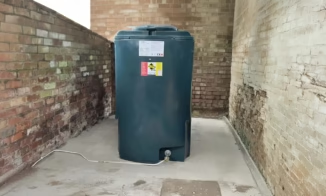
Most modern domestic installations require a bunded oil tank. A bunded tank features a double-wall construction where the outer layer contains any leaks from the inner tank.
This design prevents oil from escaping into soil, groundwater, or nearby watercourses.
Safe positioning
Oil tanks must be positioned to minimise fire risk and environmental damage. Installers must consider:
proximity to buildings
proximity to drains or watercourses
access for maintenance and delivery vehicles
Stable base installation
Tanks must be installed on a solid, level base, typically made from concrete or paving slabs, to ensure stability and prevent structural damage over time.
Professional installation by a qualified engineer ensures these safety requirements are met.
Why Bunded Oil Tanks Are Recommended
Bunded oil tanks have become the industry standard for domestic oil storage because they provide additional protection against leaks and environmental damage.
Unlike single-skin tanks, bunded tanks feature two layers:
Inner tank: stores the heating oil
Outer tank (bund): acts as a protective containment layer
If the inner tank develops a leak, the outer bund captures the fuel before it can escape.
This design offers several advantages:
improved environmental protection
reduced risk of fuel spills
compliance with UK environmental regulations
increased durability and long-term reliability
Because of these benefits, many installers recommend bunded tanks even when regulations do not strictly require them.
Choosing the Right Oil Tank for Your Property
When selecting a heating oil tank, several factors should be considered to ensure the system meets both regulatory requirements and your household’s heating needs.
Capacity
Domestic tanks typically range from 1000 litres to 2500 litres, depending on the size of the property and heating demand.
Material
Oil tanks are commonly manufactured from:
high-density polyethylene plastic
steel
composite materials
Plastic tanks are popular for their corrosion resistance and durability, while steel tanks may be preferred in certain installations.
Manufacturer reliability
Choosing a reputable manufacturer ensures your oil tank meets quality standards and safety requirements.
One of the most well-known brands in the UK is Tuffa, recognised for producing durable, regulation-compliant oil storage tanks. You can explore available options in the Tuffa oil tank range.
Explore Oil Tanks from Pro-Line Direct
If you are planning a new installation or replacing an old tank, selecting a high-quality oil tank is essential for long-term reliability and compliance.
At Pro-Line Direct, we offer a wide selection of heating oil tanks suitable for domestic and commercial installations. Our range includes durable bunded tanks designed to meet UK safety and environmental regulations.
You can browse our full range of oil tanks available at Pro-Line Direct to find a model that suits your property’s heating requirements.
Tips for a Smooth Oil Tank Installation
To ensure your oil tank installation goes smoothly and meets all relevant regulations, consider the following steps:
Check local planning requirements
Although most domestic tanks fall under permitted development, checking with your local council avoids potential complications.
Choose the correct tank size
Select a tank that provides adequate storage capacity without exceeding permitted development limits.
Use a qualified installer
Professional installers understand environmental regulations and can ensure the tank is positioned safely and correctly.
Schedule regular maintenance
Regular inspections help identify early signs of wear, leaks, or structural issues, extending the life of the tank.
FAQs
Do you need planning permission for a domestic oil tank?
In most cases, domestic oil tanks fall under permitted development and do not require planning permission if they meet size and location guidelines.
What size oil tank can be installed without planning permission?
Typically, tanks up to 3,500 litres may be installed under permitted development rules.
Do oil tanks need to be a bunded oil tank?
Many modern installations require bunded oil tanks to prevent environmental contamination in the event of a leak.
How far should an oil tank be from a house?
Oil tanks are usually installed at least 1.5 metres from non-fire-rated buildings and 1 metre from property boundaries, although exact requirements can vary.
Where can I buy a compliant oil tank?
You can browse compliant domestic and commercial tanks through the Pro-Line Direct oil tank range, including trusted brands such as Tuffa.