Strength training is one of the most reliable ways to build long-term health, confidence and physical resilience. The challenge isn’t choosing whether to begin, but deciding which equipment genuinely supports your goals. Most people end up comparing two popular options: free weights and multi-gyms. Both can take your training forward; they simply offer different paths. What this really comes down to is understanding how you like to train and which system makes it easier for you to stay consistent.
Before getting into the differences, it helps to recognise why any form of strength training matters. Even small amounts of physical activity create measurable physical and psychological benefits, a point backed by research from Cambridge University:
https://www.cam.ac.uk/research/news/physical-activity-even-in-small-amounts-benefits-both-physical-and-psychological-well-being
When your equipment fits your space, your routine and your personality, it becomes far easier to stay engaged and enjoy the process.
Versatility and Exercise Variety
Versatility is often the deciding factor. Free weights offer almost endless possibilities. With a pair of dumbbells or a barbell, you can squat, press, hinge and pull in ways that hit every major muscle group. Once you understand the basics, you can adjust angles, tempos and ranges of motion without needing any additional attachments. If you enjoy experimenting or changing your routine often, free weights naturally suit that mindset.
Multi-gyms serve a different purpose. They provide structured, machine-guided exercises such as chest presses, lat pull-downs and seated rows. The variety is strong, but it’s not as flexible as free weights. Some lifters appreciate having those fixed, reliable movement patterns; others find them limiting. If you like creative programming, free weights give you more freedom.
Space Requirements
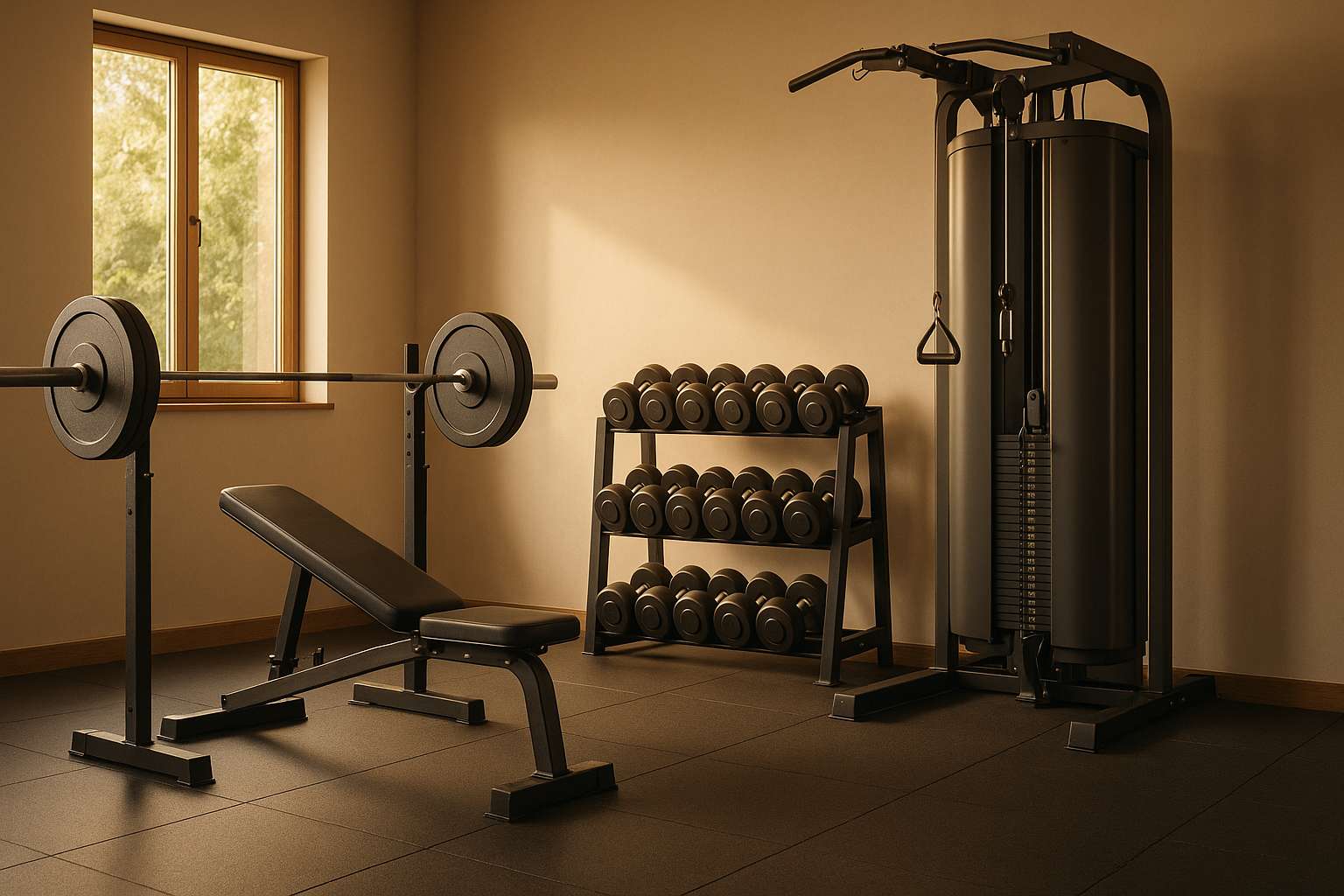
Your available space has a big influence on which approach works best. Free weights are compact and easy to store. A small rack of dumbbells or an adjustable set can live quietly in a corner and come out only when you need them. Even a barbell setup is surprisingly manageable when not in use.
A multi-gym takes a different commitment. These machines have a permanent footprint, require dedicated floor space and need clearance for cables and attachments. If you have a garage, home gym or insulated outbuilding, they fit beautifully. In a smaller flat or shared room, free weights usually make more sense.
To explore compact and versatile equipment for your home setup, visit:
https://prolinedirect.co.uk/product-category/home/gym-equipment/
Safety and Solo Training
If you train alone, safety shapes your experience. Free weights allow freedom but come with responsibility. Lifting heavy without a spotter requires good judgement and solid technique. The upside is that free-weight training develops stabiliser muscles and full-body coordination, which pays off in everyday movements and long-term functional strength.
Multi-gyms provide a guided path. The cables and fixed tracks reduce the likelihood of dropping a weight or losing balance. For beginners or anyone returning from injury, this built-in stability can make a huge difference. You still need good form, but the machine handles some of the risk for you.
Cost and Long-Term Investment
Cost plays a role in most home-gym decisions. Multi-gyms tend to be more expensive up front due to their engineering, frames and multi-station designs. They offer convenience and structure, but the initial investment is significant.
Free weights are easier to start with financially. Adjustable dumbbells or a small barbell set provide a low-cost entry point. As your strength grows, you can add plates or heavier dumbbells one step at a time. This modular approach spreads out the cost and helps you build your setup gradually.
Muscle Development and Training Style
Free weights recruit stabiliser muscles with every lift. Your core works harder, your balance improves and your whole body learns to coordinate under load. This makes free-weight training ideal for people who want functional strength that carries over into sport, work and daily life. It also supports cardiovascular health, with Oxford University research highlighting that consistent exercise significantly reduces cardiovascular disease risk:
https://www.ox.ac.uk/news/2021-01-14-no-limit-benefits-exercise-reducing-risk-cardiovascular-disease
Those wider health benefits make the free-weight route appealing if you want long-term resilience rather than just isolated strength gains.
Multi-gyms, by contrast, specialise in guided, isolated muscle work. They make it easier to feel specific muscles contracting, which is ideal for targeted hypertrophy or controlled rehabilitation. The machine supports you throughout the lift, so you can focus entirely on contracting the intended muscle.
Ease of Use
A multi-gym is designed to be beginner-friendly. You adjust the pin, check the diagrams and start lifting. If you want a predictable, structured session without worrying about technique too much in the early stages, this feels reassuring.
Free weights demand a bit more from you. You need to learn proper form and understand how to brace, stabilise and control each movement. But once you get the hang of it, the flexibility is unmatched. You can pair compound lifts with accessories, build circuits or train in functional patterns that mirror real-life movement.
To explore strength-training tools suited to both beginners and more advanced lifters, visit:
https://prolinedirect.co.uk/product-category/home/gym-equipment/strength-training/
Final Thoughts
Picking between free weights and a multi-gym isn’t about declaring a winner; it’s about choosing the system that matches your habits, space and long-term goals. If you enjoy versatility and want to build functional, full-body strength, free weights are a trusted route. If you prefer guided movements, additional safety and a single station that handles most exercises, a multi-gym fits the brief.
Either way, you’re choosing a path that supports better health, stronger muscles and more confidence in your body. Both options can transform your fitness journey—you just need the one that feels right for your home and your training style.