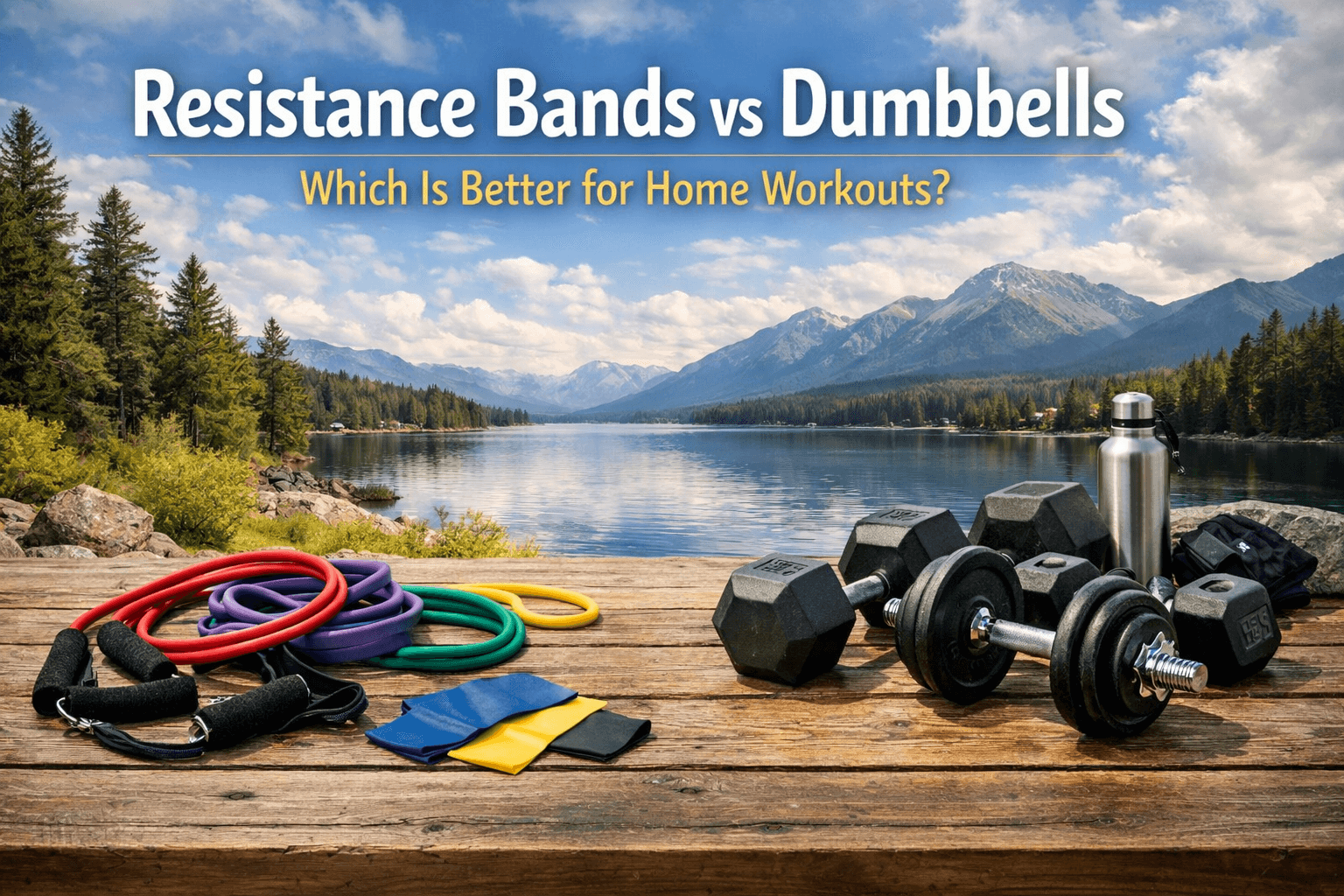
Resistance Bands vs Dumbbells: Which Is Better for Home Workouts?
If you’re building a home workout routine for the first time, one of the most common questions is whether resistance bands or dumbbells are the better investment. With more people choosing to train from home, selecting the right equipment has become an important first step in creating a setup that supports long-term strength, mobility, and overall fitness.
Both resistance bands and dumbbells are widely used in strength training at home. They can help improve muscle tone, endurance, and functional movement, and are suitable for beginners through to experienced users. However, depending on your fitness goals, available space, training preferences, and budget, one option may be more practical for your home gym environment than the other.
This guide compares resistance bands and dumbbells based on cost, portability, training effectiveness, progressive overload, and exercise variety so you can decide which type of home gym equipment best aligns with your fitness routine and lifestyle.
Cost and Accessibility
For those starting out with strength training at home, cost is often one of the biggest deciding factors.
Resistance bands are typically the more affordable option, with most full sets available at entry-level price points. This makes them particularly appealing for beginners who want to begin resistance training without committing to heavier or more expensive equipment.
Dumbbells, especially adjustable dumbbells designed for progressive strength training, can require a higher upfront investment. However, they also provide a long-term solution for building strength and muscle mass as your fitness level improves.
For a detailed breakdown of how these two training tools compare in real-world workouts, you can read more here:
https://www.today.com/health/diet-fitness/resistance-bands-vs-dumbbells-rcna212847
Space Requirements and Portability
When designing a home workout setup, storage and portability are often overlooked until equipment starts taking over valuable living space.
Resistance bands are compact and lightweight, making them ideal for smaller home gyms, flats, or shared living environments. They can easily be stored in a drawer or travel bag, which also makes them suitable for maintaining workouts while away from home.
Dumbbells, on the other hand, require more dedicated storage space. Even a modest set can take up floor area, particularly if you progress to heavier weights over time. For users with limited space, this may be an important consideration when planning a home fitness environment.
How Resistance Works
One of the key differences between resistance bands and dumbbells lies in how they apply tension to your muscles.
Dumbbells rely on gravity to provide constant resistance throughout a movement. This makes them particularly effective for traditional compound exercises such as presses, squats, and rows.
Resistance bands work through elastic tension. As the band stretches, resistance gradually increases, which can place additional load on muscles at the end of a movement range. Some users find this useful for improving muscle engagement during controlled exercises.
For further insight into how these resistance types influence training outcomes, you can explore this comparison:
https://www.danielwelstead.com/post/dumbbells-vs-resistance-bands-unravelling-the-ultimate-fitness-showdown
Progressive Overload and Strength Development
Progressive overload is essential for improving muscular strength over time.
With dumbbells, this usually involves gradually increasing weight as your strength improves. Adjustable dumbbells are commonly used in home gym environments for this reason, as they allow you to scale resistance without purchasing additional equipment.
Resistance bands can also support progressive overload by using thicker bands or adjusting tension through positioning and anchoring techniques. While effective for endurance-focused training, they may present limitations for individuals aiming to build maximum strength compared to free weights.
Exercise Variety for Home Training
Dumbbells offer a wide range of traditional strength-based exercises including:
Chest presses
Shoulder presses
Lunges
Deadlifts
Rows
Resistance bands can replicate many of these movements while also allowing for additional exercises such as assisted pull-ups or banded mobility work. This versatility can be especially beneficial in space-saving fitness environments where multiple pieces of equipment may not be practical.
Ultimately, many home users choose to incorporate both tools into their routine to maximise flexibility within their training programme.
Choosing the Right Equipment for Your Home Gym
The best choice depends on your fitness goals, training preferences, and available space.
Resistance bands may be suitable for:
Beginner home workout setups
Travel-friendly exercise routines
Space-saving fitness equipment
Lower-impact strength training
Dumbbells may be better suited for:
Building muscular strength
Structured weight training programmes
Progressive overload
Long-term home gym development